By: Dr. Sean Delaghe BSc (Hons) DC
Tendons are strong connective tissues that connect muscles to bones and are primarily made up of highly organized collagen fibres. When a tendon becomes painful or develops structural changes, terms such as tendinitis, tendinosis, and tendinopathy are often used interchangeably. However, these terms imply different underlying processes.
This might be a boring srticle for some, but underdtanding what’s going on at the microcopic level in your tendon will help you decide and unerstand how you should treat it and progres through rehab!
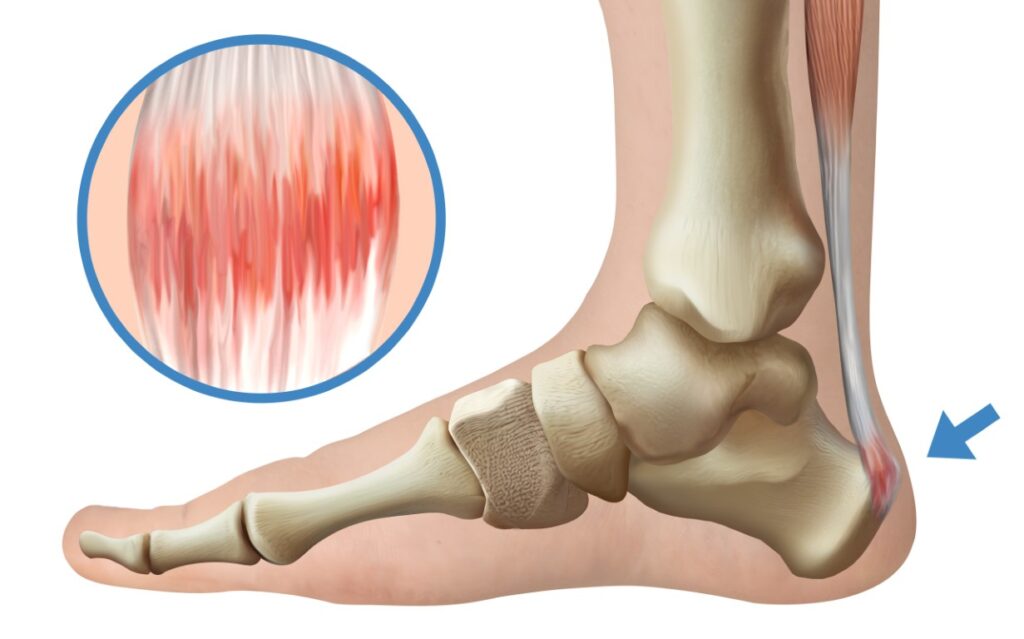
Historically, tendon pain has often been described as “tendinitis,” suggesting that inflammation is the primary cause of the problem. However, research examining painful tendons under a microscope has increasingly questioned this idea. Instead, chronic tendon problems often demonstrate changes in the organization and composition of the tendon itself, with relatively little evidence of traditional inflammatory cells.
The purpose of this systematic review was to examine the histological characteristics of abnormal tendon and connective tissue and determine whether degeneration, inflammation, or other structural changes were consistently present.
Results
This study was a systematic review, meaning the researchers collected and analyzed findings from many previous studies.
Included Studies
- 3,196 studies were initially identified.
- 52 studies ultimately met the inclusion criteria.
- The studies examined human tissue samples from a variety of tendon and connective-tissue conditions.
- The researchers specifically looked for features such as:
- Mucoid degeneration(buildup of a gel-like substance within the tendon, making the tissue less organized and mechanically weaker)
- Collagen disorganization(loss of the normal, parallel arrangement of collagen fibres that gives tendons their strength)
- Increased extracellular matrix(more of the non-cellular material surrounding tendon cells, including proteins and other substances)
- Inflammation(an immune response involving inflammatory cells and chemical signals that can occur when tissue is irritated or injured)
- Increased blood vessels / vascularity(growth or increased presence of small blood vessels within the tendon tissue)
What Did Abnormal Tendons Look Like?
The most consistent finding was structural degeneration of the tendon tissue.
Results:
- 100% of studies identified at least one feature of mucoid degeneration.
- 71% reported disorganized collagen.
- 69% reported increased extracellular matrix.
- 33% reported chondroid metaplasia, where tendon cells develop some characteristics that resemble cartilage cells.
In simple terms, abnormal tendons frequently lose some of their normal, highly organized collagen structure and develop changes in the surrounding tissue.
What About Inflammation?
Interestingly, inflammation was much less consistently identified.
- Only approximately 20% of studies specifically looking for inflammation reported inflammatory findings.
- The majority of studies did not find significant classic inflammatory-cell infiltration.
- This suggests that chronic tendinopathy is not simply an inflammatory process.
This is one of the reasons the term “tendinopathy” is often preferred over “tendinitis.” The word tendinitis implies that inflammation is the primary problem, while the histological evidence suggests that structural changes are much more consistently present.
What About Increased Blood Flow?
Increased vascularity, or the presence of additional blood vessels, was also commonly reported.
- Approximately 83% of studies reported increased vascularity.
- However, the authors noted that many studies assessed this subjectively rather than using precise measurements.
Therefore, there is evidence that blood-vessel changes are common, but the evidence is not as strong or consistent as the evidence for collagen and extracellular-matrix changes.
Practical Applications
The findings of this systematic review suggest that chronic tendinopathy is better described as a condition involving changes in tendon structure and biology rather than simply inflammation.
This does not mean that inflammation never occurs in tendinopathy. Inflammatory cells and inflammatory signaling may play a role in some tendons and at certain stages of the condition. However, classic inflammation does not appear to be the dominant or defining feature of most chronic tendinopathy.
This distinction is important because seeing an abnormal tendon on an ultrasound or MRI does not necessarily mean that the tendon is acutely injured or that it needs to be protected from activity.
Instead, tendon structure can change over time in response to factors such as:
- Aging
- Mechanical loading
- Training
- Previous injury
- Tissue adaptation
- Individual biological factors
Therefore, tendon structure and tendon pain are not necessarily the same thing!
These chronic changes that are common (mucoid degeneration, digorganization of collagen) also don’t heal with rest- you’re only hope is to progressively load the tendons and give the body the opporunity the gradually adapt to that load overtime!
If you have any questions about your tendon pain, feel free to reach out to any of our Waterloo based chiropractors, physiotherpists or RMTs HERE.
Comments are closed here.